Top 5 Steps to the Right Motion Solution
Home > Top 5 Steps to the Right Motion Solution
Top 5 Steps To The Right Motion Solution
Many variables go into developing the right motion solution for an application — from details of where and how a payload is moving to communication protocol options. Engineers may consider the following steps.
1. Assess Your Motion Needs
The first step to finding the right motion solution is an honest assessment of what your system will be doing. How heavy is the payload? Is it moving in a linear or rotary fashion? How fast does it need to go? How accurate does the motion need to be? How much holding torque is required?
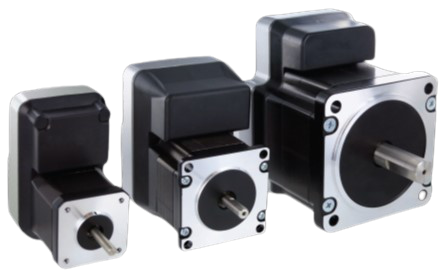
Many applications can use compact motors with integrated controls at the point of motion. Referred to as intelligent or smart motors, these include Novanta IMS’s MDrive products: Liberty MDrive, MDrive Plus, and MDrive Linear Actuators.
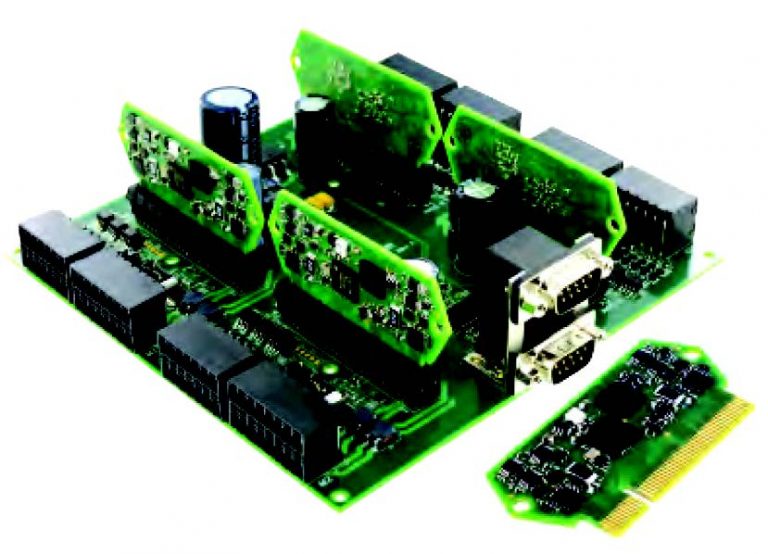
If intellectual property (IP) requires a make-vs.-buy solution, your purpose-built system may include printed circuit board (PCB) development. If so, Liberty Motion Module (LMM) is one programmable board-level controller to consider. This alternative to chipsets o ers a faster implementation path with easy-to-use programming language and the ability to support multiple axes of motion.
2. Measure Your Available Space
If you’re measuring in millimeters when designing for your application, an ultra-compact LMM solution could deliver precise motion control in the PCB-mountable package needed. If measuring in inches, your application may benefit from intelligent motion systems including: MDrive Plus rotary motors, MDrive Linear Actuators or, for more industrial applications, robust Liberty MDrive products.
3. Choose your Communication Protocol
When choosing a motion solution, ensure it can interface with your current communication protocols. MDrive products, for example, o_er communications for SPI, RS-422/485, EtherNet/IP, MODBUS/TCP, Profinet, and CANopen platforms. Purpose-built systems using LMM controllers can communicate via RS-422/485 and CANopen platforms, with additional protocols available on request.
4. Consider Your Timeline
Intelligent motor systems are already tested and validated, so they can shorten time-to-market by plugging seamlessly into new or existing designs. An array of customization options tailors them to your specific application requirements.
Purpose-built motion systems created with LMM programmable motion controllers can speed prototyping, using optional one- and four-axis development boards. These boards can be daisy-chained to deliver the exact number of motion axes required and can even be designed into systems as production units. In addition, LMM runs on MCode, the same intuitive language used to program MDrive products. This common interface lets you prove a concept on easy-to-interface MDrive integrated motors while simultaneously developing your final solution, including uploading of validated code.
5. Calculate Your Return On Investment
Intelligent motors can benefit a wide range of motion applications. Their compact, streamlined design fits into new designs, as well as existing applications with limited space. System costs can be lowered, wiring reduced, and reliability increased with fewer separate components.
For purpose-built motion solutions, LMM can speed development over chipset solutions. The LMM programming language shared with MDrive products provides a fast-track to prototyping and concept validation, a unique approach when taking steps to design the right motion solution.
MDrive® Intelligent Motors
Liberty MDrive
MDrive Plus

MDrive Linear Actuator

Liberty Motion Module
PCB-Mountable Controller